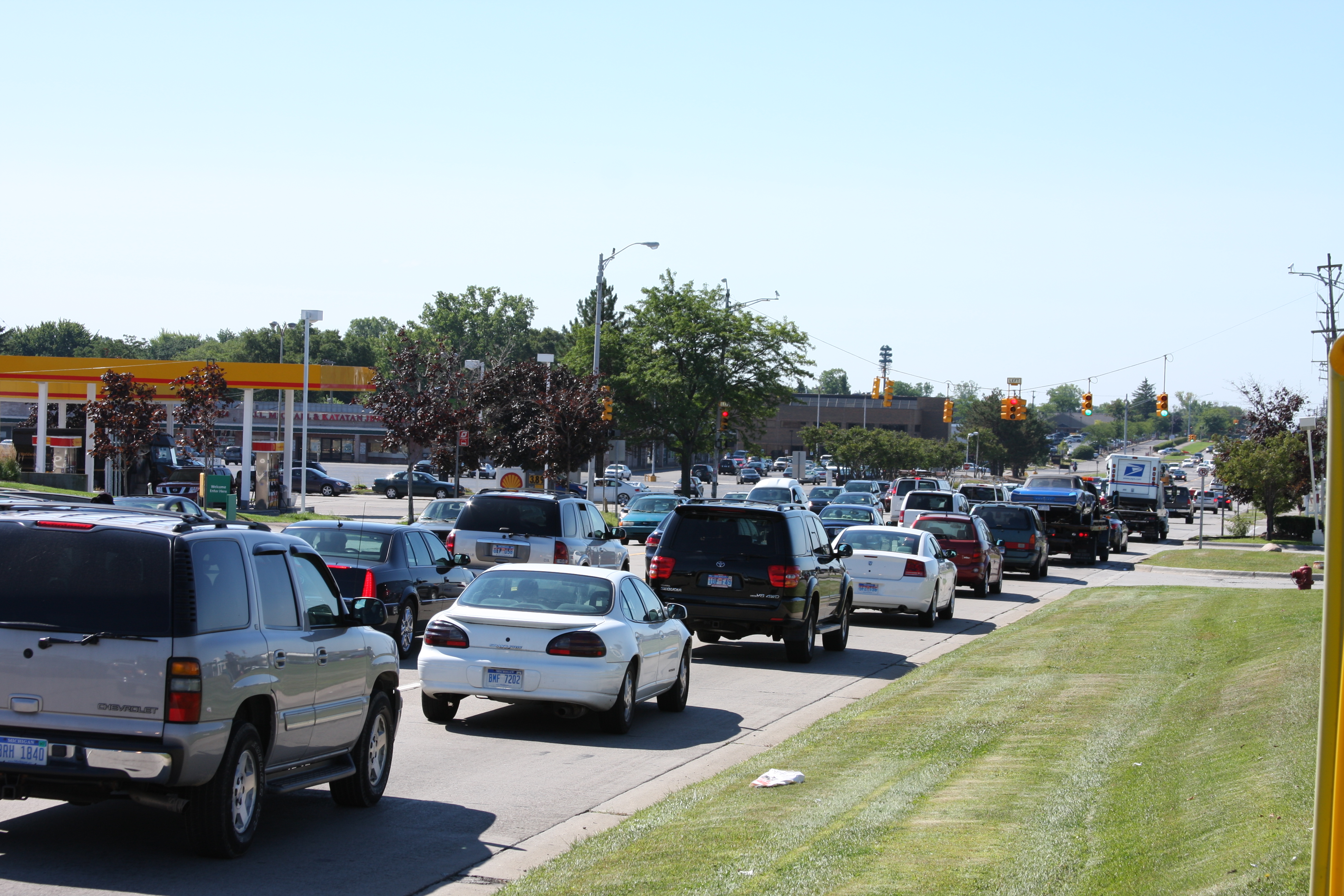
WJR Paul W. Smith Show: Guests talk about road funding
Jim Holcomb, senior vice-president at the Michigan Chamber, spoke on the Paul W. Smith Show this morning, and said he is behind the governor’s plan to fix Michigan’s roads in 2013.
Also speaking on the show this morning were Sandy Baruah, Detroit Regional Chamber President & CEO, who said he is supportive of the governor’s Michigan agenda for 2013.
Senate Majority Leader Randy Richardville also spoke about several issues being discussed in Lansing.
To listen to the radio broadcasts online, click here, or below each excerpts. To read the entire transcript, see below the excerpts.
Jim Holcomb, Senior Vice-President at the Michigan Chamber
“We’ve seen enough studies, we’ve had enough blue ribbon commissions we know the roads are in a crisis situations,” Jim said. “One of the things the government has to do, one of the primary functions is infrastructure, and we simply just don’t have enough money.”
************************************************************************************
Sandy Baruah, Detroit Regional Chamber President & CEO
“The great news is that for the Detroit Regional Chamber our number priority is exactly the same as the governor’s, which is funding the transportation that he talked about in the State of the State address. We need more and better jobs in the state of Michigan. Infrastructure is absolutely key to making that happen.”
*************************************************************************************
Senate Majority Leader Randy Richardville
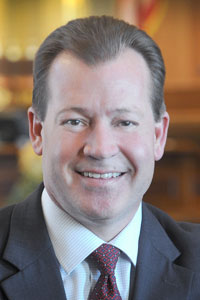 “
““You and I are both from Monroe, and there is no coincidence that the shock absorber was built right over the state line. The roads in Michigan have always been challenging.”
Randy_Richardville__Rick_Snyder____George_Zimmermann_-1359659231
*****************************************************************************************
News/Talk 760 WJR Transcript
January 31, 2013
Paul W. Smith: Happy to welcome the Senate Majority Leader Randy Richardville back to the Paul W. Smith show on WJR – Mr. Majority Leader.
Senator Randy Richardville: Good morning, Paul. How are you?
P: I’m very good.
R: Good. Welcome to Lansing.
P. Nice to be here! We come at least once a year.
R: Well, we grew up in the same neighborhoods, basically, down in Monroe, but this is where I spend a lot of my time now, so it’s kinda like Johnny Carson welcoming you to downtown Burbank or something crazy like that, I don’t know.
P. It’s nice to be here and nice to see. What I think and hope will be everybody working together to make Michigan better. Transportation, the roads, that’s a big, big, deal. Road bills, hike gas tax, vehicle fees, Lansing State Journal headline, “Nobody likes to see an increase in taxes” me included. On the other hand I’m kinda tired of people talking about how bad the roads are and chipping a tooth while driving down the road.
R: Yes, you know, you and I are from Monroe. No coincidence that the shock absorber was built right over the state line.
R: The roads in Michigan have always been challenging partly because of the federal formula. A lot of people don’t know this but back when they decided where the federal funding would go, they looked at the interstate structure and said: do you go north and south or east and west through a state? Because we’ll give you more money to help promote interstate transportation. Well, Michigan of course you can’t go north through Michigan, can’t go east or west through Michigan, so we had a bad formula way back in the 50’s and 60’s. Haven’t been able to change that because there are less donor states than donee states, so who is going to give that up now. So, we get less money back from the federal government, that’s the starting point. And the clay in SE Michigan, all the water from the Great Lakes drains and goes out to the Atlantic Ocean; we have different things underground in Michigan than any other northern state because of the Great Lakes. So, we have challenges here to begin with. And then, secondly, we have been underfunding for a long time because we put our gasoline tax at a straight amount, 19 cents, instead of a percentage. Therefore, inflation eats away at the amount we’ve been investing in our roads for the last 20 years. So that structure, that financial structure has to be changed. Not only how we collect the money, but then how we distribute it has to be looked at as well. In this debate, I think one of the most important things and I have talked to the Michigan Department of Transportation about this is to delineate exactly which projects would move up the five year schedule, so today there’s a five year plan. If you want more money from us, tell us specifically what you’re going to do. In Monroe County does that mean you’re going to fix I-75? Is it going to be Dixie highway? What is it going to be? And finally add some accountability and responsibility into this road funding process.
R: You know, Paul, if I could add something, some business people in Detroit, as well as some government leaders in the state, had a regional transportation authority bill that we passed last fall, late last fall, which creates probably the best travel infrastructure system in Detroit’s history. You know, we invented the automobile so we should have transportation there and the regional transit authority is going to be a part of that. We found a way to finance all the lights; you know a lighting problem, 90,000 lights. 45,000 were burned out, and now we have that process going. We have people going back to work. So ask the Governor. Says there are some great things happening in Detroit. But the real mess right now is the budgeting process and $350 million dollar problem, something like that. You have to fix the structure you can’t just throw money at this problem.
*****************************************
Jim Holcomb
P: Touching base with Jim Holcomb, Senior Vice President of the Michigan Chamber. Good morning to you. Nice to see you, sir.
J: Good morning, Paul W.
P: A lot going on, but one of the things you’re keyed into, in your initiative the Governor talked about it is road repair, the roads are in terrible condition. You’ve got a Just Fix the Roads plan underway that in light of Tom Greenwood’s story in the Detroit News the other day “Conditions ripe for growing potholes.” Top page of the Lansing State Journal “Road bills hike gas tax, vehicle fees.” You’re in the midst of something that people are not real happy about ever, possibly raising their taxes, whether it’s through increasing gas tax that might happen, on the other hand people really want the road – it’s been a topic of conversation for so long you want to do something about it.
J: Oh, absolutely. Paul W. We’ve seen enough studies, we’ve had enough blue ribbon commissions. We know the roads, we’re in a crisis situation, and if it is one thing that the government has to do, one of the primary functions is infrastructure and we simply do not have enough money.
P: We don’t have money and it seems ridiculous and I would be at the top of a list to say, I don’t think we aren’t taxed enough. I think we are taxed plenty, but we have to get some money somewhere to fix those roads. I’d rather they find it somewhere else in the budget where it’s being wasted, but I know there’s a lot of looking at every line item and doing the best they can do, but what’s your suggestion?
J: Well what I think we need to do is make sure we don’t take any options off the table at this point. And you’re right. I don’t think that anyone feels we’re under taxed, but what we do know is the roads are in crisis situation; we’ve looked at MDOT. I saw a figure yesterday: since 2011, they have saved over $125 million dollars worth of efficiencies and technologies and are really streamlining, but it’s not nearly enough. We probably need about $1.6 billion a year.
P: Wow.
J: To just keep them up to the condition we need. Right now, 1/3 of them are in poor condition. If we do nothing, by 2018, 2/3rd’s of our roads will be in poor condition.
P: Oh, boy, and you talked about $1.6 billion to fix them and build and maintain them. Imagine how much these roads are costing us because of damage to our cars, our trucks, everything. You probably have a figure.
J: Well, each Michigander spends approximately $360 dollars a year just because of damage to your car. I know I’ve had two flat tires this year, I’ve had a bent rim, it just costs you money. The worst part is we’re in crisis situation now, if we do nothing, we are just passing on crushing debt further to future generations. Every dollar we don’t spend now on maintenance costs us $6 more in the future.
P: We’re the auto capital of the world; we ought to have nice roads to drive those automobiles, SUV’s, and trucks on. I’m tired of how people keep saying how great the roads are in Germany, for example - the autobahn - and all those memories of just how great those roads are. They pay through the nose to keep those roads that way. It looks like we have to kick in a bit more one way or another. To get those roads back and keep them in good condition.
J: Oh, we absolutely do. We need to make the investment here in Michigan. We need to bring our roads up to standard. It’s about economics; it’s about a better business climate. That certainly impacts business across the state and our members at the Michigan Chamber and it’s also about saving lives. One third of all fatalities are due to poor road conditions.
P: Really?
J: We need to save lives, save money, and fix the roads.
P: I’m all for it. Do we go to – Where do we find.
J: You can go to michamber.com or you can also go to justfixtheroads.com to get more information. We hope everyone joins in; let your legislators know. We’re real thankful Sen. Kahn, Sen. Richardville, Sen. Pappageorge, really taking a leadership role; the Governor, making a strong call for infrastructure investment in his State of the State. We just cannot afford to do nothing. We have to move forward.
****************************************
Sandy Baruah
P: What’s most important to you on this legislative agenda?
S: Well, the great news is that for the Detroit Regional Chamber our number one priority is exactly the same as the governor’s, which is funding the transportation he talked about in State of the State address. We need more and better jobs in the state of Michigan. Infrastructure is absolutely key to making that happen. If we want the tax revenue to fund all the other important things that we want to do in this state, you know like more education funding, for example. We need more and better jobs, and we’ve got to rebuild our infrastructure, and it’s costing us money because when we let these roads and these bridges and these tunnels decay to the point they have it costs a lot more to fix them when they’re really broken as opposed to just maintaining them.
P: We’ve been talking about that, and unfortunately the reality is it’s as Jim Holcomb said from the Michigan Chamber, the reality is we need money, we need some money on those roads. People have talked about how bad they are for a very long time. Looks like there is going to be some real action, and I think nobody wants higher taxes, but the reality is that if we can get the roads fixed we need to do something.
S: The Governor phrases this really well; it’s a little like taking car of your car. Would you forgo oil changes because you want to save money? Well no, you wouldn’t do that because your engine is going to freeze up, and then you’re going to have to have an entire new engine placed in your ‘75 Malibu or whatever you’re driving.
P: Right.
S: So, it’s just common sense. We just have to do it. And again we have to look at the long term: this will create more and better jobs this will make Michigan more attractive to employers so they can expand or come to our state and hire more Michiganders and that will increase our tax base.
P: Because of your experience in Washington D.C., which was extensive, give me just a thumbnail sketch of if you will just a comparison of the governance as a state as compared to what you would see in Washington?
S: I think best description is night and day.
P: Really?
S: Absolutely. I mean what we’re seeing in Washington now is dysfunction, we’re seeing strife, but what we’re seeing in Michigan is incredible progress. I mean look at what has happened in the last couple of years. First of all Michigan is now growing as a state.
P: No question about that.
S: I mean we lost 750,000 jobs in the last decade. Michigan is now on a path of growth. Our economy is growing; we’re making more progress than the national average. on unemployment rate. We’ve reduced regulations by over a 1,000 regulations. We are the comeback state and things are getting done in Lansing. It hasn’t always been perfect, and the Democrats and the Republicans aren’t always holding hands, singing kumbaya, skipping down the street together, but things are getting done. I hope that continues in this new session. I know our friends on the Democratic side are a little unhappy with some of the decisions that were made during the lame duck. I hope they get over that and just, you know, obviously stick to their principles, but let’s make sure we move Michigan forward. We don’t want Lansing to look like Washington D.C.
P: No, absolutely right. Well put.